 FREE shipping on orders over US$200
As data centers, cloud computing, and enterprise networks demand higher bandwidth and faster data transmission, the 100G QSFP28 transceiver has become a key component in modern high-speed networking. But what makes 100G QSFP28 an ideal choice, and how do you select the right module for your setup?
This guide will explain 100G QSFP28, its features, applications, and how it compares to other 100G transceivers, along with a detailed specification table for better clarity.
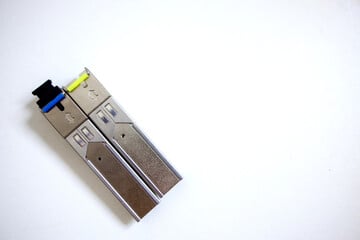
What is 100G QSFP28?
100G QSFP28 (Quad Small Form-Factor Pluggable 28) is a compact, hot-pluggable optical transceiver designed for 100 Gigabit Ethernet (100GbE) applications. It is widely used in data centers, cloud computing networks, and telecom infrastructures.
Key Features of 100G QSFP28:
✔ Compact Design – Same physical size as QSFP+ but supports 100Gbps
✔ Low Power Consumption – Typically <3.5W per module
✔ High Port Density – Maximizes space efficiency in networking hardware
✔ Versatile Connectivity – Supports SMF (Single-Mode Fiber) and MMF (Multimode Fiber)
✔ Backward Compatibility – Can support 40G networks using breakout cables
100G QSFP28 Transceiver Variants
| Module Type | Wavelength | Fiber Type | Distance | Connector | Power Consumption |
|---|---|---|---|---|---|
| QSFP28 SR4 | 850nm | MMF | Up to 100m | MPO-12 | <3.5W |
| QSFP28 LR4 | 1310nm | SMF | Up to 10km | LC Duplex | <3.5W |
| QSFP28 PSM4 | 1310nm | SMF | Up to 500m | MPO-12 | <3.5W |
| QSFP28 CWDM4 | 1271-1331nm | SMF | Up to 2km | LC Duplex | <3.5W |
| QSFP28 ER4 | 1310nm | SMF | Up to 40km | LC Duplex | <4.5W |
Applications of 100G QSFP28
- Data Centers – Used in spine-leaf architectures for high-speed connections between switches and servers.
- Enterprise Networks – Ensures fast and reliable data transfer between critical systems.
- Cloud Computing – Supports massive bandwidth for cloud-based services.
- Telecom Networks – Facilitates high-speed fiber backbone infrastructure.
100G QSFP28 vs. Other 100G Transceivers
| Feature | QSFP28 | CFP | CFP2 | CFP4 |
|---|---|---|---|---|
| Size | Compact | Large | Medium | Small |
| Power | Low | High | Medium | Low |
| Cost | Affordable | Expensive | Moderate | Moderate |
| Port Density | High | Low | Medium | High |
Why Choose QSFP28?
- More compact than CFP transceivers
- Lower power consumption for energy-efficient networks
- Higher port density, allowing more connections in a single switch
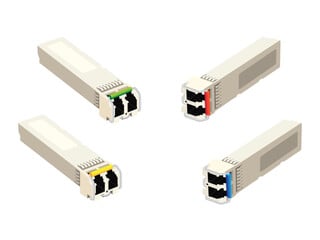
How to Choose the Right 100G QSFP28 Module
1. Consider the Transmission Distance
- For short-range (≤100m) → Use QSFP28 SR4
- For mid-range (≤2km) → Use QSFP28 CWDM4
- For long-range (10km–40km) → Use QSFP28 LR4 or ER4
2. Fiber Type Compatibility
- OM3/OM4 multimode fiber (MMF) → Best for SR4 modules
- OS2 single-mode fiber (SMF) → Required for LR4, ER4, and CWDM4
3. Connector Type
- MPO-12 – Used for parallel transmission (SR4, PSM4)
- LC Duplex – Used for serial transmission (LR4, CWDM4, ER4)
4. Power Budget & Compatibility
- Ensure the module matches the switch, router, or server specifications.
- Lower power consumption helps in reducing operational costs.
100G QSFP28 Transceivers from Fiber-Life
At Fiber-Life, we offer a wide range of high-performance 100G QSFP28 transceivers designed for data centers, cloud computing, and enterprise networks. Our transceivers provide:
✔ Guaranteed Compatibility – Works with major brands like Cisco, Arista, Juniper, and more
✔ High Performance – Stable transmission with minimal signal loss
✔ Cost-Effective Solutions – Competitive pricing with reliable quality
✔ Expert Support – Get help from our specialists for selecting the right module
Upgrade Your Network Today!
Explore Fiber-Life’s full range of 100G QSFP28 transceivers and enhance your network with superior performance and reliability. Visit Fiber-Life.com to find the perfect solution for your connectivity needs!