 FREE shipping on orders over US$200
Return Loss (RL) measures how much optical power is reflected back toward the transmitter. Excessive reflections can destabilize lasers, increase noise, and degrade system performance—especially in high-speed or analog networks.
What Is Return Loss?
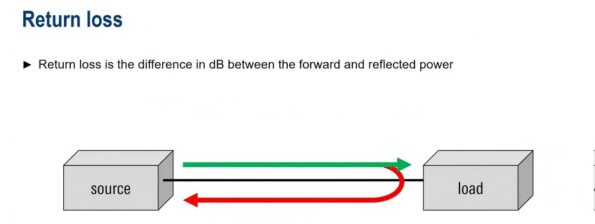
Return Loss is calculated as:
RL = –10 log (Preflected / Pinput)
Higher return loss values indicate lower reflection and better performance.
Typical Return Loss Values
| Connector Type | Typical Return Loss |
|---|---|
| PC | ≥ 40 dB |
| UPC | ≥ 50–55 dB |
| APC | ≥ 60–65 dB |
APC connectors achieve better return loss due to their 8-degree angled end face, which redirects reflections away from the source.
Best Method to Measure Return Loss
The most accurate method is using an Optical Loss Test Set (OLTS) with return loss capability.
Why OLTS is preferred:
- Directly measures total Optical Return Loss (ORL)
- Meets certification standards
- Suitable for GPON, CATV, and high-speed links
Can an OTDR Measure Return Loss?
FHO5000 Multi-Function OTDR Fiber Tester
◎ P/N: 63202
◎ Attention: For a formal quote, please send product details to sales@fiber-life.com.
Delivery: Order today and it will be shipped before from the U.S. or Hong Kong via FedEx/DHL/UPS. Free shipping on orders over US$200.
Warranty: Fiber-Life offers a 1-year warranty, 30-day returns, and 30-day exchanges.
An OTDR measures reflectance of individual events, not total ORL.
It is useful for:
- Identifying which connector causes reflection
- Troubleshooting failed RL tests
But it is not accepted for return loss certification.
Conclusion
Return loss is critical for signal stability.
For certification, use an OLTS.
For diagnostics, use an OTDR.
Understanding this distinction prevents costly testing errors.