 FREE shipping on orders over US$200
In fiber optic networks, connector selection directly affects port density, installation efficiency, long-term reliability, and upgrade flexibility. Among the most widely used connector types, SC and LC connectors are often compared when designing or upgrading optical systems.
Although both connectors deliver reliable optical performance, they are designed for different priorities and deployment scenarios. This guide explains the practical differences between SC and LC connectors and provides clear guidance on how to choose the right option for your application.
SC vs LC: Quick Comparison
| Aspect | SC Connector | LC Connector |
|---|---|---|
| Ferrule Size | 2.5 mm | 1.25 mm |
| Connector Size | Larger | Compact |
| Port Density | Lower | High |
| Locking Mechanism | Push-pull | Push-pull latch |
| Typical Insertion Loss | ≤ 0.25 dB | ≤ 0.2 dB |
| Typical Return Loss | ≥ 55 dB (UPC) / ≥ 65 dB (APC) | ≥ 55 dB (UPC) / ≥ 65 dB (APC) |
| Ease of Handling | Very robust | Better for tight spaces |
| Typical Applications | Telecom, FTTH, industrial | Data centers, high-density systems |
Quick takeaway:
If port density and space efficiency matter most, LC is usually the better choice.
If robustness, compatibility, and simplicity matter more, SC remains a strong option.
Understanding SC and LC Connectors
SC Connector Overview
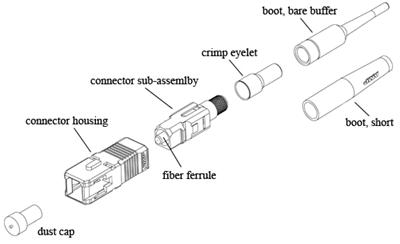
The SC (Subscriber Connector) features a square housing and a push-pull locking mechanism, allowing for secure and easy installation. Its 2.5 mm ceramic ferrule provides stable fiber alignment and consistent optical performance.
SC connectors are widely used in:
- Telecommunications networks
- FTTH deployments
- Outdoor and industrial environments
- Legacy optical systems
Their robust design and ease of handling make them particularly suitable for environments where connectors are frequently connected, disconnected, or exposed to mechanical stress.
LC Connector Overview
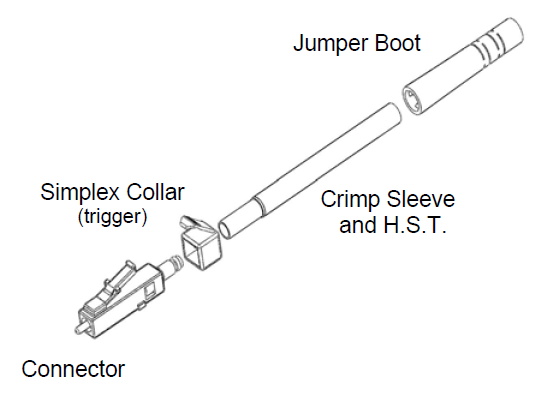
The LC (Lucent Connector) was designed to address the growing demand for higher port density. By using a 1.25 mm ceramic ferrule, LC connectors reduce connector size by roughly half compared to SC connectors.
LC connectors are commonly found in:
- Data centers
- High-density patch panels
- Switches, routers, and transceivers
- Modern enterprise networks
Their compact form factor allows network designers to significantly increase the number of fiber connections within limited rack space.
Performance Comparison: SC vs LC
Insertion Loss
Both SC and LC connectors meet strict industry standards for insertion loss:
- SC: Typical ≤ 0.15 dB, maximum ≤ 0.25 dB
- LC: Typical ≤ 0.1 dB, maximum ≤ 0.2 dB
In real-world deployments, the difference is usually minimal, provided connectors are properly terminated and maintained.
Return Loss
Return loss performance is comparable for both connector types:
- UPC polish: ≥ 55 dB
- APC polish: ≥ 65 dB
Return loss depends more on polishing quality (UPC vs APC) than on whether the connector is SC or LC.
Durability and Handling
SC connectors are often perceived as more robust due to their larger size and solid housing, making them well-suited for:
- Outdoor installations
- Industrial environments
- Technician-intensive maintenance scenarios
LC connectors, while durable, require slightly more care during handling due to their compact latch mechanism, especially in high-density patch panels.
Design Impact: Size and Port Density
One of the most decisive factors in choosing between SC and LC is port density.
- LC connectors allow approximately twice the number of ports in the same panel space compared to SC connectors.
- This advantage makes LC the dominant choice in data centers, where rack space is limited and fiber counts are high.
SC connectors remain practical where space is not constrained and where simplicity and robustness are preferred.
Typical Application Scenarios
Data Centers and Cloud Infrastructure
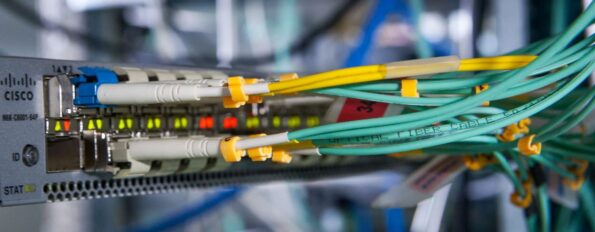
LC connectors are the standard choice due to:
- High port density
- Compatibility with modern transceivers
- Efficient cable management
SC connectors may still appear in legacy systems but are less common in new high-density deployments.
Telecommunications and FTTH Networks
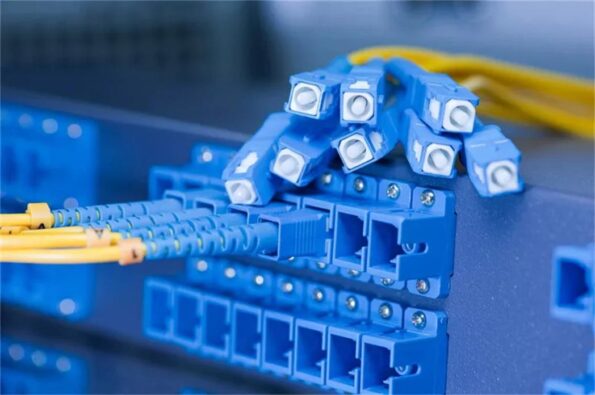
SC connectors are widely used thanks to:
- Robust mechanical design
- Ease of installation
- Compatibility with existing telecom infrastructure
LC connectors are also used, especially in dense termination points, but SC remains dominant in access networks.
Industrial and Enterprise Networks
- SC connectors are favored in industrial environments where durability and ease of handling are critical.
- LC connectors are common in enterprise IT networks requiring compact, high-performance connectivity.
Cost Considerations
SC connectors typically have a lower upfront cost, making them attractive for large-scale or cost-sensitive deployments.
LC connectors, while sometimes more expensive per unit, can reduce overall system cost by enabling higher port density and more efficient use of space.
When evaluating cost, it is important to consider total system cost, not just connector price.
How to Choose Between SC and LC Connectors
Use the following guidelines as a quick decision reference:
- Choose LC if:
- You need high port density
- Space is limited
- You are building or upgrading a modern data center
- Choose SC if:
- Robustness and ease of handling are priorities
- You are working with telecom or FTTH infrastructure
- The system must remain compatible with legacy equipment
Conclusion
Both SC and LC fiber optic connectors deliver reliable optical performance when properly selected and installed. The difference lies not in basic performance, but in design priorities and deployment environments.
SC connectors excel in stability, durability, and legacy compatibility, while LC connectors offer superior space efficiency and scalability for modern, high-density networks. Understanding these differences allows network designers to make informed decisions that balance performance, cost, and long-term flexibility.