 FREE shipping on orders over US$200
In fiber optic networks, maintaining clean and protected connector interfaces is critical to ensuring stable signal transmission. While many technicians understand the importance of cleaning and inspection, the role of Adapter Dust Caps is often underestimated. Choosing the right dust caps for different fiber optic adapters not only prevents contamination but also extends connector lifespan and reduces maintenance frequency.
This guide explains how to select the best dust caps for SC, LC, FC, ST, and other adapter types, helping you avoid common mistakes and improve your network’s long-term reliability.
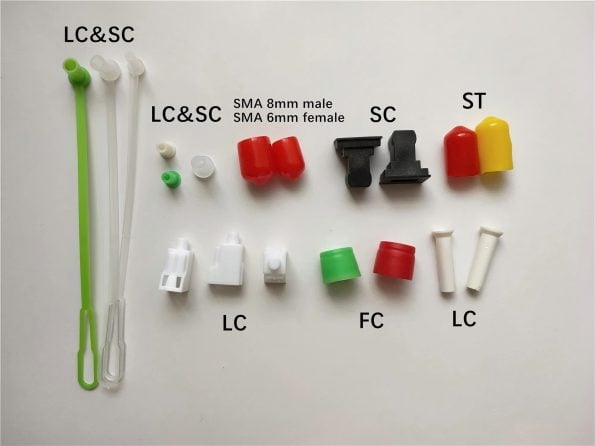
What Are Adapter Dust Caps and Why Do They Matter?
Adapter Dust Caps are protective covers placed on unused fiber optic adapter ports. Their functions include:
- Preventing dust and airborne particles from entering the adapter
- Avoiding scratches or physical deformation inside the ceramic sleeves
- Maintaining insertion accuracy and connection stability
- Reducing cleaning frequency and contamination-related failures
- Protecting equipment during transportation, storage, or installation
In high-density environments such as data centers or telecom rooms, a single contaminated port can cause insertion loss, back reflection, or even service interruption. Using the correct dust caps is a simple, cost-effective way to prevent such issues.
Key Factors to Consider When Selecting Adapter Dust Caps
Choosing the right dust cap is not simply about “does it fit.” Several critical factors influence performance, durability, and compatibility.
1. Match the Dust Cap Type to the Adapter Interface (SC, LC, FC, ST…)
Different adapters require dust caps with matching dimensions and mechanical structures. Using the wrong type may cause:
- Loose fit
- Incomplete sealing
- Ceramic sleeve misalignment
- Increased risk of contamination
Common adapter-specific dust caps include:
- SC Adapter Dust Caps – Square shape, locking contour, widely used in patch panels
- LC Adapter Dust Caps – Small form factor for high-density racks
- FC Adapter Dust Caps – Metallic or threaded interface type
- ST Adapter Dust Caps – Bayonet-style connectors
Tip:
If your network includes mixed adapter types, choose a kit that includes multiple dust cap models.
2. Select the Right Material (Rubber / Plastic / Metal)
Material impacts durability, sealing performance, and application environments.
Rubber Dust Caps
- Flexible and tight-fitting
- Best sealing performance
- Ideal for dusty or industrial environments
Plastic Dust Caps
- Lightweight and cost-effective
- Suitable for indoor or low-dust environments
- Common in large-scale patch panel maintenance
Metal Dust Caps
- Maximum durability
- Used in harsh industrial, military, or outdoor applications
- Often paired with FC/ST adapters
Different environments need different material grades to ensure long-term protection.
3. Consider Environmental Conditions
Depending on your use environment, choose features such as:
- High-temperature resistance
- UV resistance for outdoor applications
- Anti-static performance
- Moisture resistance
For data centers, standard rubber or plastic dust caps are sufficient.
For outdoor cabinets or industrial plants, high-durability options are recommended.
4. Fit and Seal Quality
A good Adapter Dust Cap should:
- Fit firmly without loosening
- Cover the entire adapter opening
- Seal the ceramic sleeve from airflow and dust
- Not deform during repeated insertion/removal
Low-quality caps can break easily or fail to protect the interface.
5. Usage Scenario: Storage, Transport, or Daily Protection
Your dust cap choice may vary based on purpose:
- Daily patch panel protection: Plastic or rubber caps
- Long-term storage: Rubber caps with better sealing performance
- Field installation: Dust caps with pull tabs for quick removal
- Equipment shipping: Metal caps for maximum protection
Common Mistakes When Choosing Adapter Dust Caps
Avoid these to ensure optimal performance:
- Using one cap type for multiple adapter standards
- Choosing cheap caps that don’t properly seal the adapter
- Leaving ports exposed because the cap “doesn’t fit well”
- Reusing old or deformed caps
- Ignoring environmental requirements
A small dust cap can prevent expensive fiber cleaning work or downtime.
Conclusion
Choosing the right Adapter Dust Caps is essential for maintaining fiber optic adapter cleanliness, performance stability, and long-term reliability. By evaluating adapter type, materials, application environments, and seal quality, you can ensure optimal protection for your network infrastructure.
A small, inexpensive dust cap can prevent major signal losses, reduce maintenance effort, and extend the overall life of your fiber optic system.