 FREE shipping on orders over US$200
In the field of fiber optic communication, precision and cleanliness go hand in hand. While high-performance components like transceivers, patch cords, and adapters often receive the spotlight, adapter dust caps are one of the most overlooked yet essential accessories for maintaining the long-term reliability of fiber networks.
The Role of Adapter Dust Caps
Adapter dust caps are specially designed covers placed on the open ends of unused fiber optic adapters. Their primary purpose is to prevent dust, debris, and other contaminants from entering the adapter and potentially damaging the sensitive fiber end-faces or connectors.
In optical communication systems, even microscopic dust particles can lead to signal attenuation, reflection, or permanent damage to the connector interface. Dust caps provide an effective first layer of defense, ensuring that ports not currently in use remain sealed from harmful environmental exposure.
Why Are Dust Caps Necessary?
Modern optical networks operate at high speeds and with extremely low tolerance for loss or interference. Unused adapter ports—especially in high-density distribution panels or patch fields—can easily become contaminated without protection. Once dust enters the connection point, it can:
- Block or scatter optical signals, reducing transmission quality.
- Cause physical damage to polished connector end-faces.
- Increase insertion and return loss, which affects system performance.
- Lead to costly maintenance or replacements of fiber assemblies.
Regular cleaning can help mitigate these issues, but prevention is more efficient and cost-effective. Using adapter dust caps is a simple but critical measure for protecting the physical integrity of your fiber network.
Common Types of Adapter Dust Caps
Different interfaces require different dust cap designs. Here are the most commonly used types:
| Adapter Interface | Dust Cap Type | Typical Material | Usage Scenario |
|---|---|---|---|
| LC/MU (1.25mm) | LC Dust Cap | Antistatic Polycarbonate | FTTH, Enterprise Networks |
| SC/ST/FC (2.5mm) | SC Dust Cap | Soft ABS Plastic | Patch Panels, Fiber Closures |
| MPO/MTP | MPO Dust Cap | Durable Thermoplastic | Data Centers, Backbone Cabling |
| SFP/QSFP Transceivers | Module Dust Cap | Silicone or Soft Rubber | Equipment Storage, Spare Module Safety |
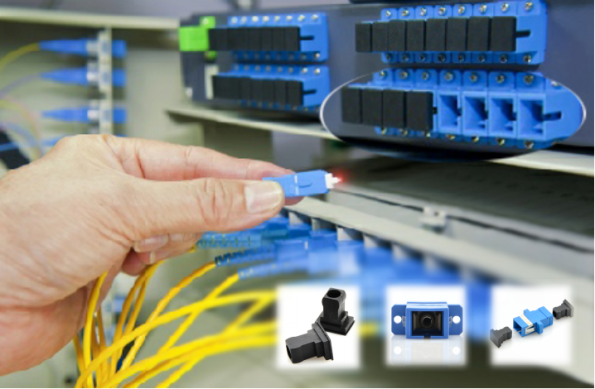

Each cap is designed to fit snugly into its matching adapter port or transceiver module, forming a seal that keeps out dust and moisture.
Best Practices for Using Adapter Dust Caps
To ensure optimal protection of your fiber infrastructure, consider the following usage recommendations:
- Always cap unused ports immediately after disconnection.
- Inspect dust caps regularly for wear or contamination—replace if necessary.
- Store dust caps in clean, dry containers when not in use.
- Avoid using the same dust cap repeatedly without cleaning, as trapped dust can be transferred back to the port.
Enhancing Fiber Network Reliability
Maintaining a clean and protected environment for optical components is key to extending the life of your network and minimizing performance issues. Adapter dust caps play a frontline role in this effort. Whether in large-scale data centers or smaller access points, they are an affordable and effective solution that should be included in every fiber maintenance strategy.