 FREE shipping on orders over US$200
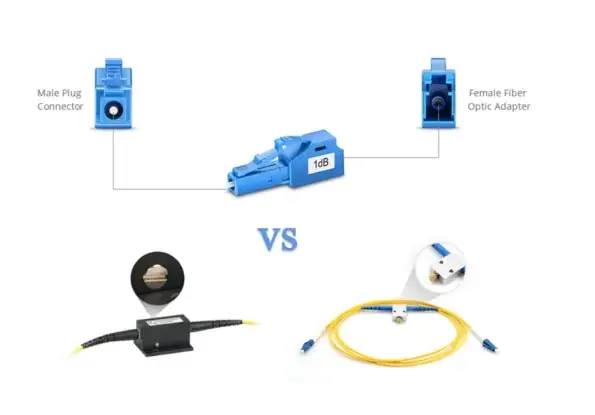
A Variable Optical Attenuator (VOA) is an essential component in fiber optic communication systems. It is designed to manage the optical power level of signals, ensuring that light intensity at the receiver remains within the ideal range. This helps prevent signal distortion, bit errors, and equipment damage caused by excessive optical power.
Unlike fixed attenuators, VOAs offer adjustable control over signal power. This feature is indispensable in WDM (Wavelength Division Multiplexing) and DWDM (Dense WDM) systems, where balancing power across multiple channels is crucial for optimal performance.
Understanding how does a variable optical attenuator work is key to mastering optical power management in advanced fiber networks.
How Does A Variable Optical Attenuator Work?
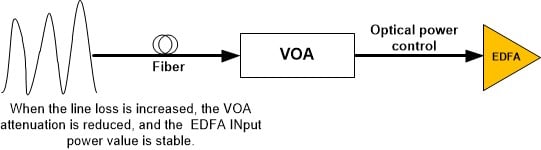
The working principle of a VOA involves controlled reduction of optical signal intensity without altering its wavelength or other key characteristics. Essentially, it operates by introducing a variable level of optical loss into the transmission path.
Here’s a simplified explanation of how a variable optical attenuator works:
- Light Enters the Device:
The optical signal passes through an input fiber or waveguide into the VOA structure. - Attenuation Mechanism Activates:
Depending on the design, the VOA reduces the signal power using one of several technologies—such as MEMS mirrors, liquid crystal modulation, or fiber bending. - Adjustable Power Output:
The attenuation level can be manually or automatically controlled. The output signal maintains its quality while the optical power is precisely reduced to the desired level.
In dynamic systems, automated VOAs continuously monitor and adjust optical power to maintain equilibrium, ensuring consistent performance even under fluctuating network conditions.
Importance of VOAs in Optical Networks
In optical transmission systems, maintaining consistent power levels across all channels is critical. VOAs serve multiple purposes that make them indispensable in both testing and field deployment:
- Prevent Receiver Overload:
Keeps optical power within safe operating limits for sensitive photodetectors. - Power Balancing in WDM Systems:
Equalizes multi-wavelength signals, improving overall transmission quality. - Testing and Calibration:
Used to simulate various attenuation scenarios during R&D or production testing. - Dynamic Power Control:
In DWDM systems, VOAs help automatically regulate real-time signal levels under variable conditions.
By offering precise control, VOAs enhance system reliability, reduce maintenance needs, and extend network life cycles.
Technologies Behind VOA Design
VOAs are available in several design types, each offering unique advantages depending on network or laboratory requirements:
| Technology | Working Principle | Advantages | Applications |
|---|---|---|---|
| MEMS (Micro-Electro-Mechanical Systems) | Uses micro-mirrors to control light direction | Fast response, compact design | DWDM networks, dynamic systems |
| LCD (Liquid Crystal Display) | Voltage changes crystal orientation to modulate light | Smooth attenuation, low power | Portable or integrated modules |
| Fiber Bending | Slight mechanical bending causes light loss | Simple, robust, cost-effective | Manual control or field adjustments |
| Thin-Film / Electro-Optic | Uses filter layers or crystals to vary intensity | High precision, fast response | Automated power control, lab systems |
Each technology supports precise and repeatable attenuation, enabling network engineers to balance optical signals with high accuracy.
Applications of Variable Optical Attenuators
VOAs are widely used across telecommunications, testing, and data transmission fields. Common applications include:
- Optical Power Equalization: Maintain stable power in multi-channel WDM systems.
- Testing & Measurement: Verify performance of fiber amplifiers, transceivers, or switches.
- Automatic Power Control (APC): Adjust signal levels in real-time dynamic networks.
- Optical Amplifier Regulation: Prevent EDFA saturation and ensure linear gain performance.
- Fiber Network Research: Support prototype testing and optical performance evaluation.
These applications demonstrate how VOAs contribute to high reliability and optimized network design.
Advantages of Variable Optical Attenuators
Integrating VOAs offers a wide range of operational and economic benefits:
- Accurate Optical Power Management
- Enhanced Signal Stability and Quality
- Flexible Manual or Automatic Operation
- Compact Size for Easy Integration
- Long-Term Cost Efficiency
By understanding how a variable optical attenuator works, network designers can implement better power control strategies, minimizing signal degradation and achieving superior network performance.
Conclusion
To summarize, a Variable Optical Attenuator is a crucial device for controlling optical power levels in fiber communication systems. Understanding how does a variable optical attenuator work helps network engineers and system integrators design more stable, reliable, and high-performing optical networks.
As next-generation technologies such as DWDM, 5G backbone networks, and hyperscale data centers continue to evolve, the demand for precise and adaptive VOAs will only grow. Whether used for power equalization, testing, or automatic control, VOAs remain a foundational element in achieving efficient and dependable optical transmission.