 FREE shipping on orders over US$200
When you’re prepping cables for splicing or termination, the quality of your first cut sets the tone for everything that follows. Purpose-built Fiber Optic Cutters, part of the broader category of Fiber Optic Tools, give you clean, repeatable cuts on jackets, strength members, and buffer tubes—so your workflow stays fast, tidy, and predictable.
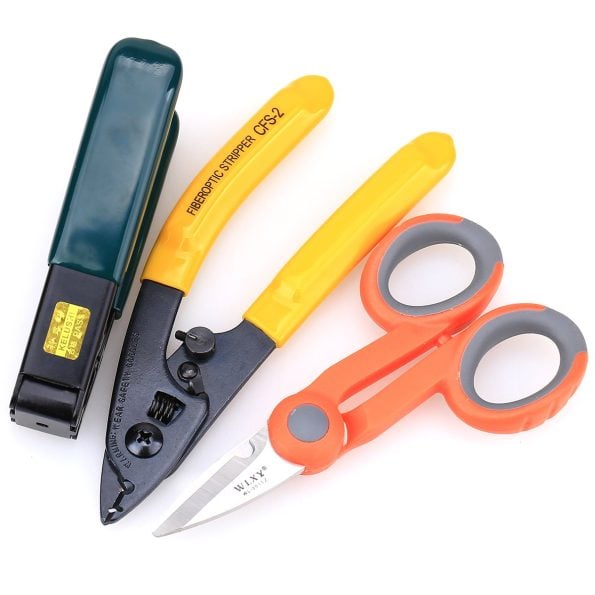
Why the First Cut Matters
A sloppy cut can kink the buffer, nick the glass, or leave Kevlar frayed—each of which adds time, waste, and risk. Clean, perpendicular cuts:
- keep fibers at the designed length and strain relief points,
- prevent jacket deformation that can introduce microbends later,
- reduce rework before stripping, cleaning, and cleaving.
Cut vs. Cleave: Cutters prepare the cable (jacket, Kevlar, buffer). The cleaver creates the optical end-face on the bare glass. Both are essential—but they do different jobs.
Features That Define Professional Fiber Optic Cutters
- Blade Geometry & Material – Hardened, precision-ground blades stay sharp longer and maintain edge symmetry.
- Cable Support & Clamp Design – Prevents cable roll and crushing during cutting.
- Length Control – Indexed stops and markings ensure consistent prep lengths.
- Ergonomic Design – Reduces hand fatigue and improves safety in repetitive tasks.
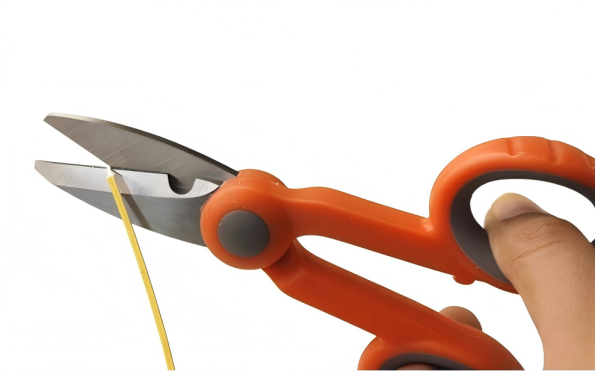
These details separate everyday tools from specialized Fiber Optic Tools designed for high-performance optical networks.
Matching the Cutter to the Task
- Tight-buffered fibers (900 µm): Fine-edge cutters prevent buffer deformation.
- Kevlar® yarns: Dedicated Kevlar shears avoid fraying and blade dulling.
- Indoor/outdoor jackets: Cable-rated cutters avoid crushing or ovalizing.
- Ribbon fiber prep: Pair with a ribbon stripper for consistent results.
- Armored cable: Start with armor/ripcord tools, then finish with a jacket cutter.
The Role of Fiber Optic Cutters in a Complete Fiber Optic Tools Kit
A modern workflow doesn’t rely on a single tool—it relies on a set of specialized Fiber Optic Tools. Fiber Optic Cutters work hand-in-hand with strippers, cleavers, and inspection scopes to form a reliable toolkit for installers and technicians. By choosing the right cutter, you protect every step that follows: stripping, cleaning, cleaving, splicing, and testing.
Maintenance Tips That Save Time
- Clean blades daily to remove dust and residue.
- Rotate or replace blades on schedule for sharp cuts.
- Inspect cut quality at the start of each shift.
- Store with guards to prevent damage or dulling.
Quick Checklist Before You Buy
- Delivers clean, square cuts in one try
- Hardened, replaceable blades with long service life
- Ergonomic grip for extended use
- Compatible with your fiber cable types
Closing Thoughts
Reliable connections start with clean prep work, and Fiber Optic Cutters are the unsung heroes of that process. As a core part of your Fiber Optic Tools collection, they ensure your network build stays efficient, precise, and trouble-free.